
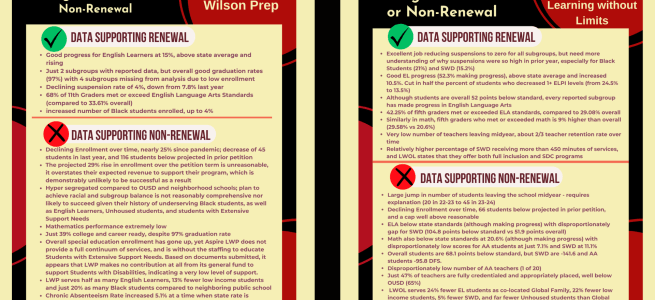

Since OUSD regained local governing control in 2009, the Charter School Renewal process has been largely opaque and somewhat perfunctory, with most charter schools being recommended for renewal by our prior Charter Office staff, and the board nearly always agreeing with them. This will be the first time that any of our current board members have faced a renewal petition, and among the first to be decided since the passage of AB 1505, which revised charter law, providing additional tools for holding charter schools accountable for serving the same student populations served by public school districts and evaluating the impact of charter schools on their schools.
We are not off to a promising start. The two first schools up for renewal are Aspire Lionel Wilson Prep (LWP) and Education for Change (EFC) Learning without Limits (LWOL), which had their public hearings on August 28, 2024. In that meeting, four board members1 asked some important and detailed questions about special education, staffing, demographics, enrollment, newcomers and English Learners as well as academic preparedness. The charter school leaders weren’t asked to respond on the fly, but were given the questions in writing in order to provide more information. Both charter schools have addressed a few of the questions in their presentation that is posted on the OUSD website2 but most of the specific questions have not been publicly responded to. It seems that the charter industry is not happy with this level of accountability, complaining to President Sam Davis and probably others that the board was asking too many questions. No doubt threats of lawsuits will follow, as they have in the past, intended to intimidate board members and staff into backing off of this increased level of oversight for charter schools used to operating opaquely and without accountability for serving all students well.
OUSD started off strong with changing the expectations around charter renewal. The former head of the charter school office Sonali Murarka had been making clear to charter schools at renewal that they must move significantly toward serving ALL students – demographic groups, English learners, students with disabilities, low income students – or they would not survive renewal. At a board meeting for Francophone charter school, the new executive director warned his board that if they did not change their demographics to serve more low income and students with disabilities that they would be non-renewed. Charter schools were clear on what the new expectations were.
The current charter office leader Kelly Krag-Arnold worked with Ms Murarka at that time and also understood the new expectations, so charter schools should certainly have continued to expect that they needed to make changes, and some have. Earlier this year, Ms Krag-Arnold and her staff led a board Study Session about the law and the possibilities, and said at that time that the Board priorities would guide the process. There was an expectation at that meeting that the charter matters committee, led by Director Thompson, and also the larger board would provide guidance to staff. Those follow up meetings never happened, and so Ms Krag-Arnold told board members in public meetings that the board’s opportunity would be to ask questions during the public hearing, a process which the charter community is now complaining about.
Both of the charter schools facing decision tonight are “middle tier” schools, which means they are neither high performing nor awful and so could either be renewed or denied by the Board
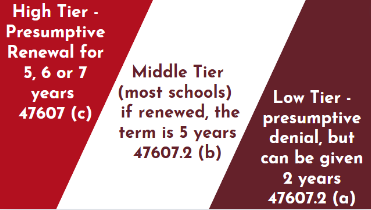
In the staff reports that the charter school staff prepared for both EFC LWOL and Aspire LWP there is an in depth analysis of the petition, academic successes and challenges, and facts that could support legal findings to renew and also to deny. Because it is a middle tier, that is exactly what you should expect, and then it becomes the job of the governing board to decide if the charter should be renewed or not. It is not the job of staff to make that determination, but the authorizing board. That is how the Alameda County Board of Education does it, and that is how OUSD should do it, but doesn’t.
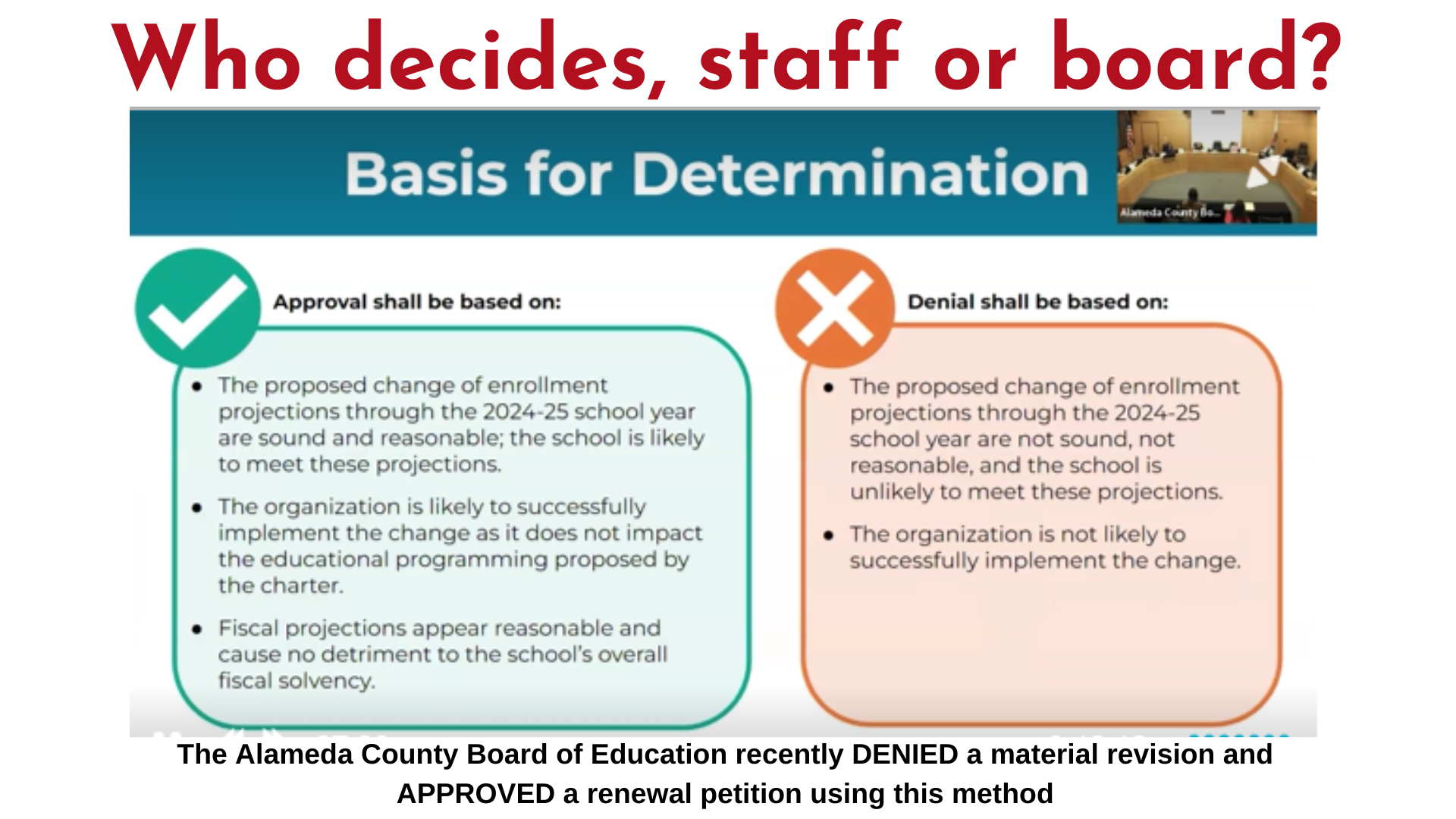
Unlike the ACOE charter office, the OUSD charter office has issued a recommendation for these middle tier renewals and has recommended Approval for both petitions with the findings necessary to do so. Nonetheless, the charters will only be renewed if the Board votes to approve. By issuing a recommendation without an alternate set of findings for denial the charter office backs the Board into a corner, because the board must take SOME action within the proper time frame, and they must create their own set of findings because the charter office staff has not done so.
Pre-pandemic, OUSD ran into this problem several times, where the staff had recommended approval of a charter petition and the Board decided not to approve, but then had to scramble to get staff to create the necessary findings that they could then approve. In response to that, former board director Shanthi Gonzales sought to change policy to ensure that didn’t happen. Instead, the charter committee, led by Director Hutchinson, left the policy in place.
Aspire Lionel Wilson Prep has significant academic and other issues that could be the basis for denial of their petition
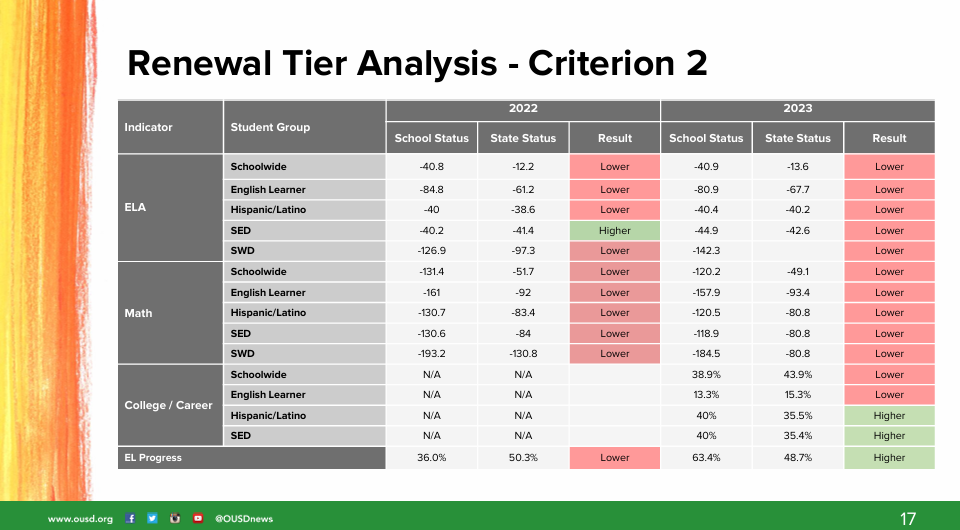
Charter schools must show that they are making progress towards state standards in order to be renewed, overall and for subgroups of students. The difficult decision for the OUSD Board is has Aspire LWP made that progress for all students, and the answer is no. While there are a few bright spots, overall, and with specific subgroups they have not. All of this is pointed out in the staff report.
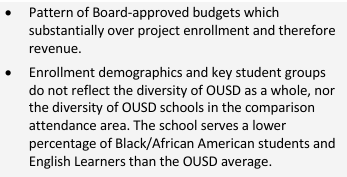
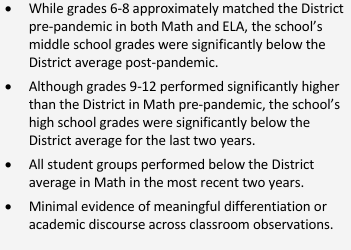
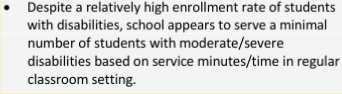
In the face of all of this evidence, the staff report recommends Approval, when it is just as possible that the Board, which is the only entity that can Approve the petition, could find that the petition should be denied.
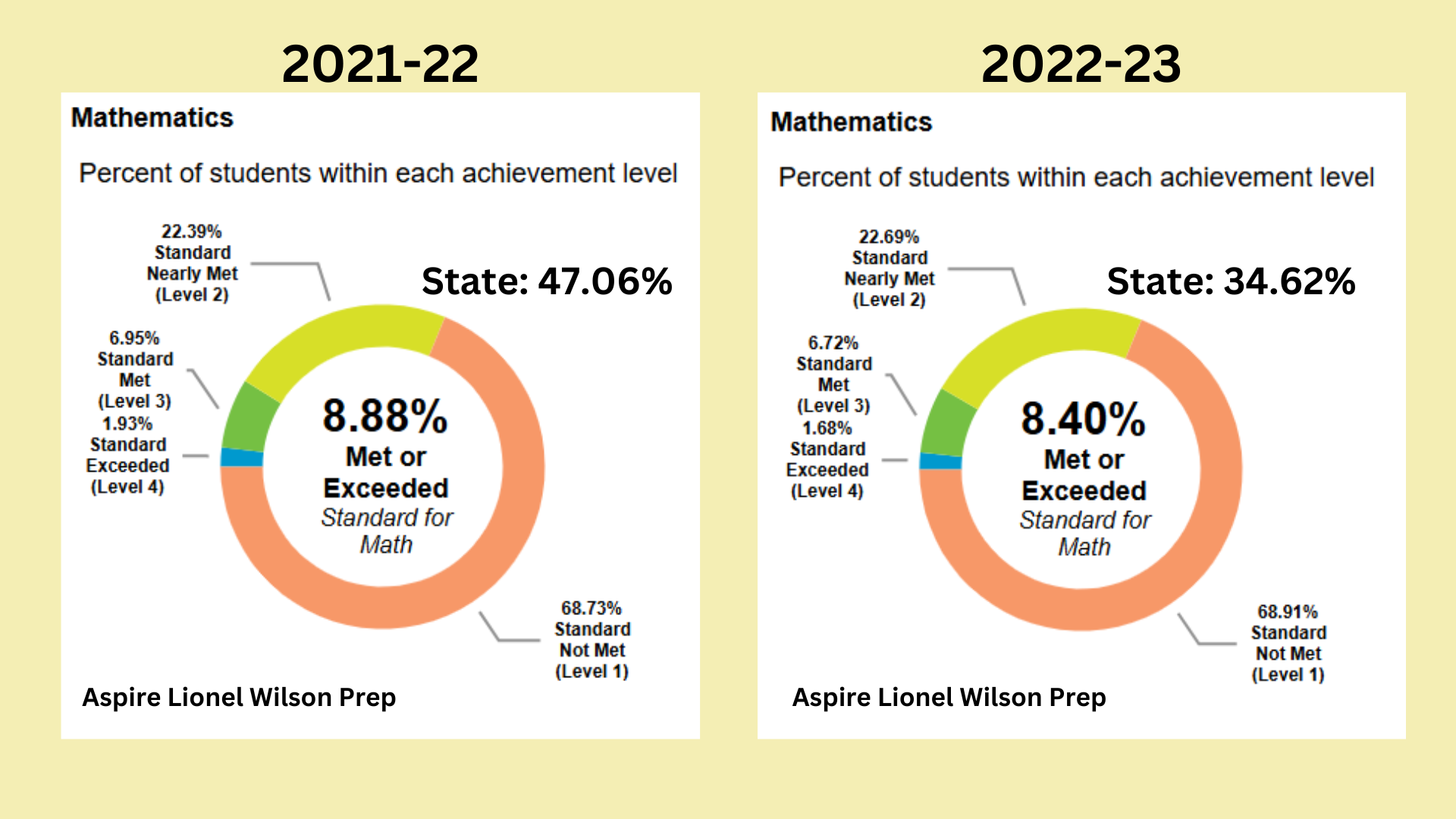
Extremely low math scores and falling
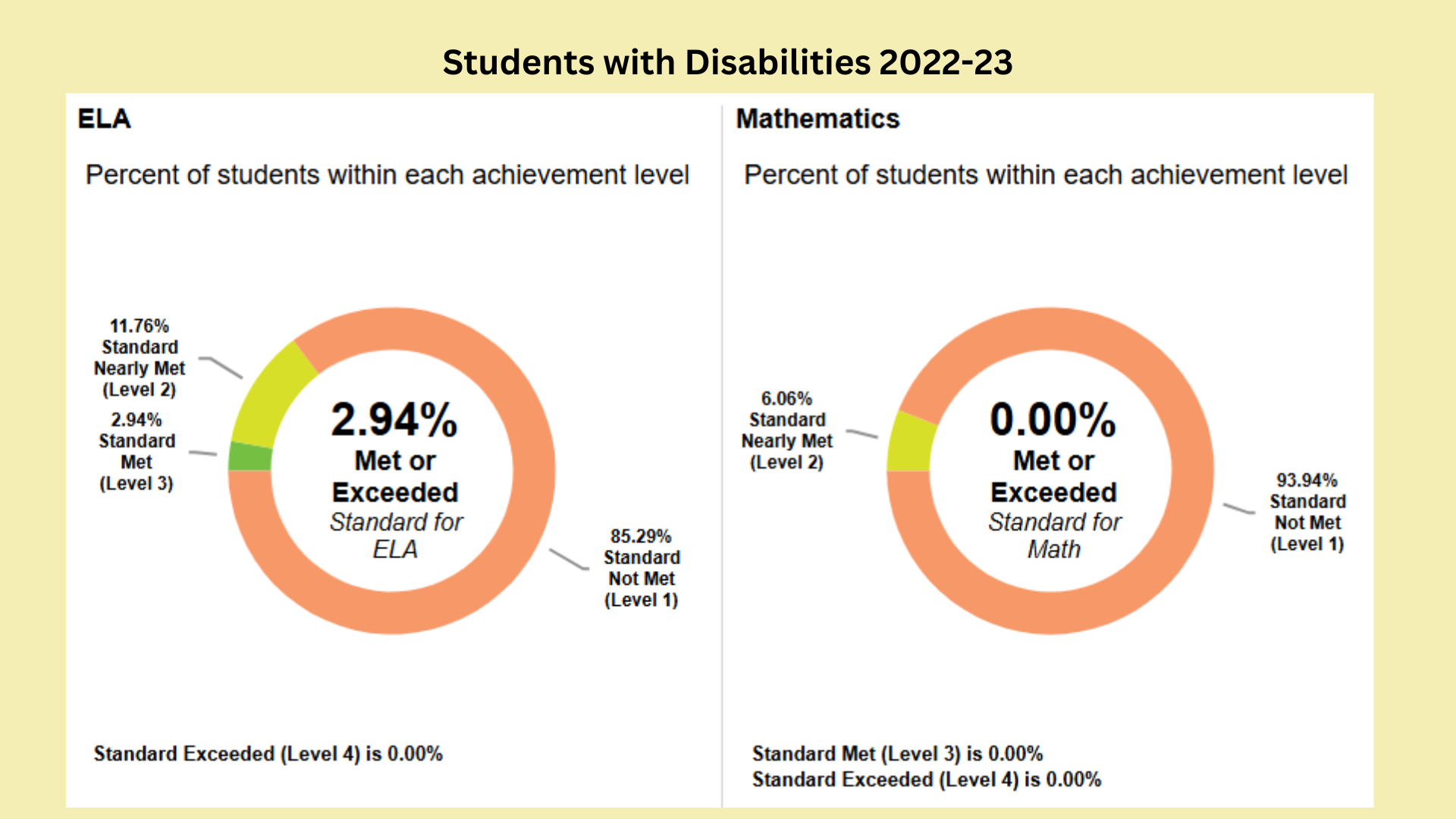
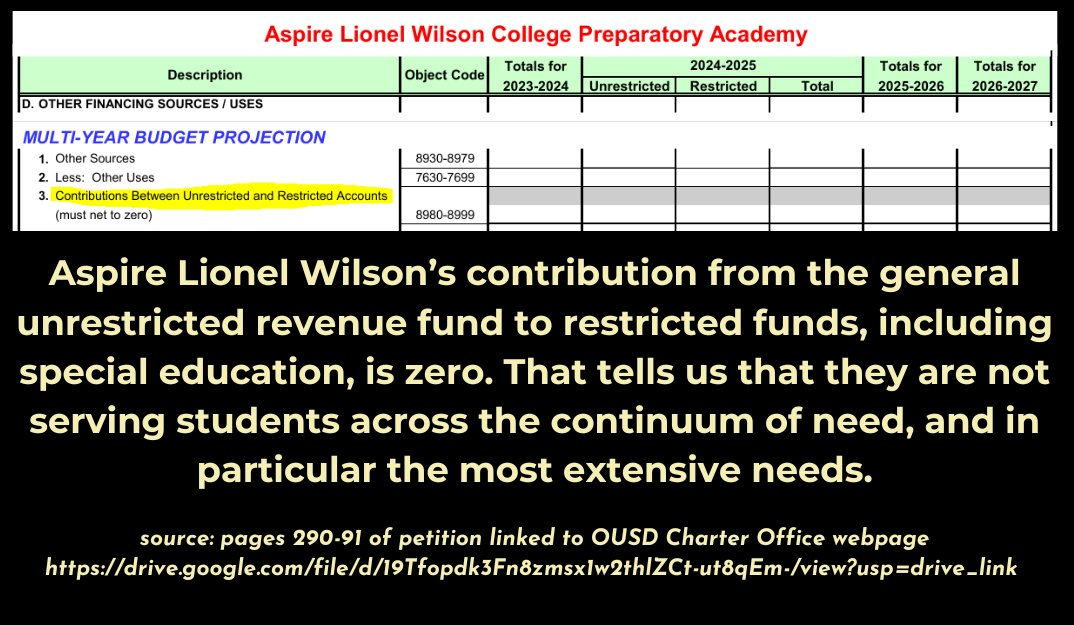
Failing to Educate Students with Disabilities
Failing to make progress towards state standards
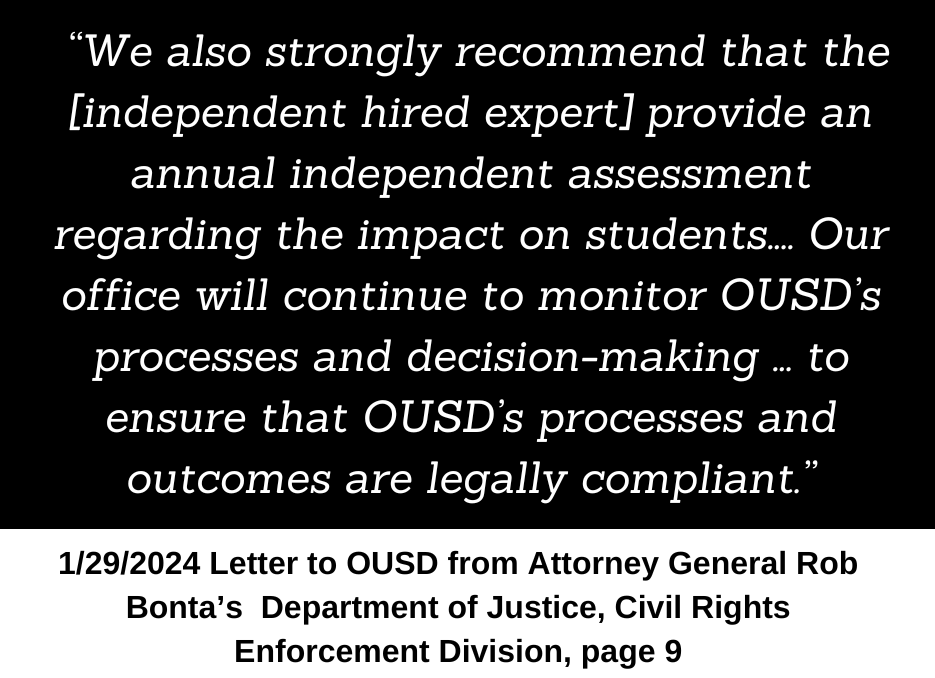
OUSD must hold charter schools accountable in a way that they have not done before
Although the charter industry tries to blur the lines between charter schools and public schools, there are some very important differences between them, and one is that charter schools operate under a “charter” – a type of contract – that sets out goals and promises about how the charter school will function. If they fail to meet those promises, they should not be renewed for an additional term. According to the California Charter Schools Association: “In exchange for operational freedom and flexibility, charter schools are subject to higher levels of accountability than traditional public schools.” Part of that accountability is the renewal process, determining whether the school is making progress towards state standards, and is doing it while serving the same groups of students as served by the territorial jurisdiction in which they operate.
It is time for OUSD to step into their role as a responsible authorizer, and if they determine that means holding Aspire LWP accountable for failing to educate all students, then the fact that the charter office, who is not the decision maker, has backed them into a corner by recommending approval without findings to deny, should not be the reason why they fail to act.
- President Davis and Board Directors Brouhard, Williams and Bachelor each asked questions from the dais which they then sent to the charter schools for follow-up. Some but not nearly all of the questions are answered in the presentations that will be made tonight by the charter schools. Directors Lerma and Thompson made comments, but did not submit questions. Vice President Hutchinson did not make comments or ask questions. ↩︎
- The presentation for Aspire LWP and EFC LWOL will be made at the decision hearing tonight, 9/23/2024 ↩︎





















 Parents United for Public Schools